

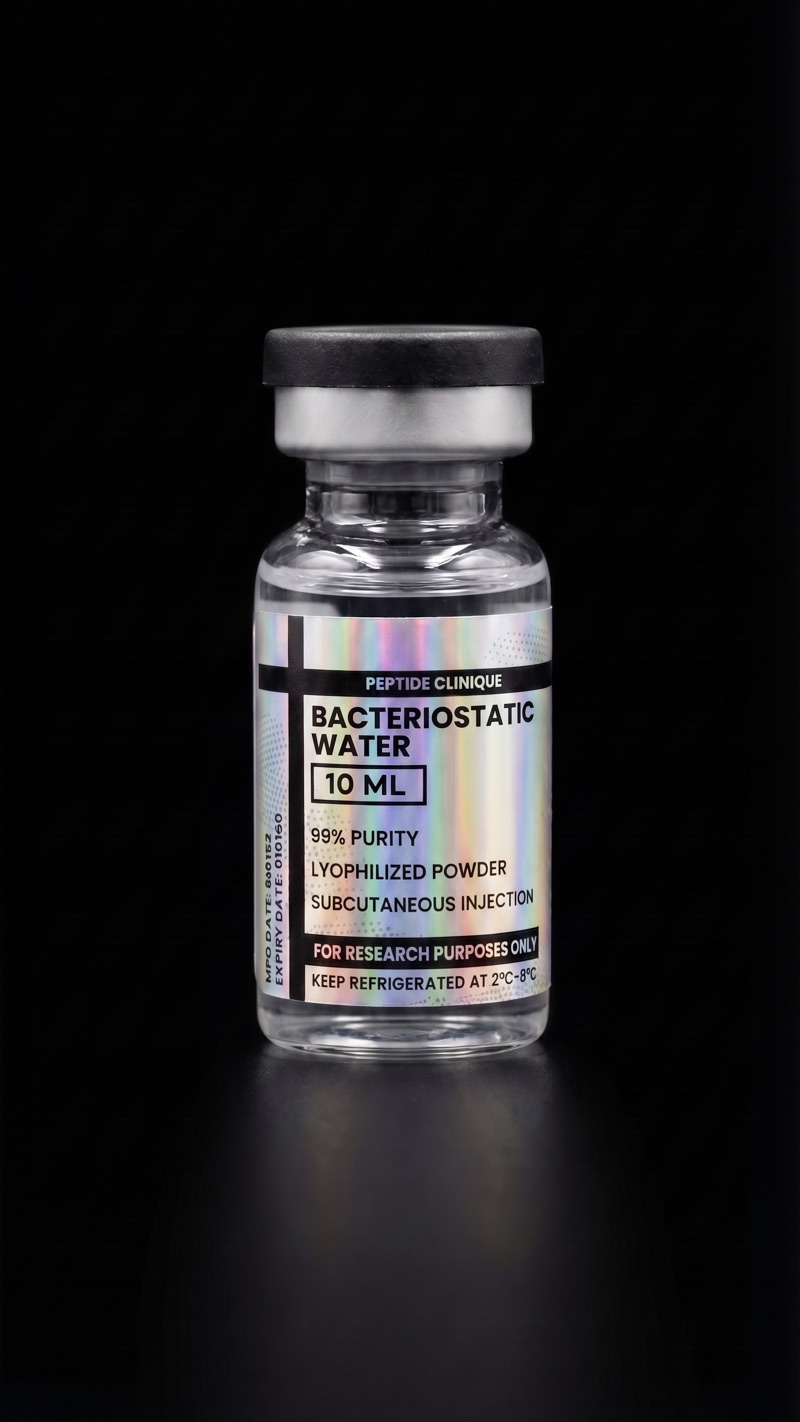
Bacteriostatic Water 10ml
$15.00
Laboratory Grade • High Precision Formula • 10ml
What is Bacteriostatic Water?
Bacteriostatic Water (BW) is a sterile solution of 0.9% benzyl alcohol in water for injection. It is an essential supply for any peptide research lab — used to reconstitute lyophilized (freeze-dried) peptides before use. The benzyl alcohol acts as a preservative, inhibiting bacterial growth and allowing the reconstituted solution to be stored safely for up to 28 days when refrigerated.
Peptide Clinique offers pharmaceutical-grade bacteriostatic water in Canada — the essential companion to every peptide in our catalogue.
Why Bacteriostatic Water for Peptide Reconstitution?
Unlike regular sterile water, bacteriostatic water contains benzyl alcohol which prevents bacterial contamination after the vial has been opened. This is critical for research applications where a single vial may be accessed multiple times. Using plain water risks contaminating your peptide solution — bacteriostatic water keeps it safe between uses.
Key Uses in Peptide Research
- Peptide reconstitution — dissolving lyophilized peptide powder into solution
- Multi-use vials — safe to use over multiple research sessions
- Extended storage — reconstituted peptides stable for up to 28 days refrigerated
- Compatible with all peptides — BPC-157, TB-500, Ipamorelin, GHK-Cu, and more
How to Reconstitute Peptides — Step by Step
- Clean your workspace — wipe vials and work surface with an alcohol swab
- Draw bacteriostatic water — use a sterile syringe to draw the desired volume of BW
- Inject slowly into peptide vial — aim the stream at the side of the glass, not directly onto the powder
- Gently swirl — do not shake. Roll the vial between your fingers until fully dissolved
- Store refrigerated — keep at 2–8°C and use within 28 days
Recommended Volume by Peptide
| Peptide | Amount | Recommended BW Volume | Concentration Per 0.1ml |
|---|---|---|---|
| BPC-157 | 10 mg | 2 ml | 500 mcg / 0.1ml |
| TB-500 | 10 mg | 2 ml | 500 mcg / 0.1ml |
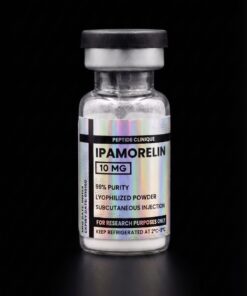
| Ipamorelin | 10 mg | 2 ml | 500 mcg / 0.1ml |
| DSIP | 10 mg | 2 ml | 500 mcg / 0.1ml |
| GHK-Cu | 50 mg | 5 ml | 1 mg / 0.1ml |
Frequently Asked Questions
Can I use regular sterile water instead?
Regular sterile water can be used but does not contain a preservative — meaning the vial should be used in a single session only. Bacteriostatic water is strongly preferred for multi-use research applications.
How long does reconstituted peptide last?
When reconstituted with bacteriostatic water and stored refrigerated at 2–8°C, most peptides remain stable for 4 weeks. Always check individual peptide storage guidelines.
⚠️ For Research Use Only. Not intended for human consumption. Must be handled by qualified researchers.
Essential for: BPC-157 | TB-500 | Ipamorelin | Retatrutide | and all other peptides
Product Information
| Purity | 99%+ |
| Form | Lyophilized Powder |
| Administration | Subcutaneous Injection |
| Storage | Keep Refrigerated at 2°C–8°C |
| MFG Date | 01/01/2026 |
| Expiry Date | 01/01/2030 |
⚠️ FOR RESEARCH PURPOSES ONLY — Not intended for human consumption.
Research Background: The Essential Role of Bacteriostatic Water in Peptide Research
Bacteriostatic water (BW) is a foundational supply for any peptide or protein research laboratory. It is a sterile water preparation containing 0.9% benzyl alcohol (9mg/mL) as a bacteriostatic preservative, packaged in multi-dose vials. Unlike sterile water for injection (SWFI), which is a single-use preparation, bacteriostatic water is specifically formulated for multi-use scenarios where repeated punctures of the vial septum are required — making it uniquely suited for peptide reconstitution protocols where a single vial of reconstituted peptide may be used over days or weeks.
The benzyl alcohol content serves two critical functions: (1) it inhibits the growth of bacteria and other microorganisms that could enter the vial during repeated needle punctures, and (2) it helps stabilize many reconstituted peptides in solution. The United States Pharmacopeia (USP) establishes standards for bacteriostatic water, and pharmaceutical-grade BW must meet strict specifications for sterility, benzyl alcohol content, endotoxin levels, and pH.
In peptide research, proper reconstitution media selection is as important as the peptide itself. Using substandard water or improper reconstitution techniques can degrade peptides, introduce contaminants, or produce inaccurate concentration calculations — all of which compromise research validity. Understanding bacteriostatic water’s properties and proper use is therefore foundational knowledge for peptide researchers.
Mechanism of Preservation: How Benzyl Alcohol Works
Benzyl Alcohol as a Bacteriostat
Benzyl alcohol (C₆H₅CH₂OH) at 0.9% concentration achieves bacteriostasis through multiple mechanisms. It disrupts bacterial cell membrane integrity by partitioning into the lipid bilayer, increasing membrane fluidity and impairing the selective permeability that bacteria need for metabolic function. At bacteriostatic (rather than bactericidal) concentrations, benzyl alcohol halts bacterial reproduction and growth without necessarily killing all existing cells — relying on the immune system to eliminate organisms in therapeutic applications, or simply preventing contamination growth in research vials.
Benzyl Alcohol’s Effect on Peptide Stability
Beyond its preservative function, benzyl alcohol has been shown to stabilize certain peptide formulations by reducing aggregation and improving solution stability over time. Some peptide-benzyl alcohol interactions may occur through hydrophobic interactions or hydrogen bonding that help maintain peptide conformation in solution. Research on formulation science has examined the concentration-dependent effects of benzyl alcohol on peptide stability — a consideration in the design of long-term reconstituted storage protocols.
pH Stability Contribution
Bacteriostatic water is formulated to a pH of approximately 5.7–6.8, which is slightly acidic. This mild acidic environment benefits many peptides by (1) improving solubility for basic or neutral peptides, (2) slowing acid-catalyzed or base-catalyzed hydrolysis reactions, and (3) maintaining conformational stability for pH-sensitive peptide structures. The pH buffering properties of pharmaceutical-grade BW provide a consistent reconstitution environment across research protocols.
Product Specifications and Quality Standards
Peptide Clinique’s Bacteriostatic Water 10ml meets all pharmaceutical-grade standards:
- Benzyl alcohol content: 0.9% (9mg/mL) — USP specification
- Volume: 10mL per vial
- Sterility: Sterile-filtered through 0.22µm membrane; aseptically filled
- Endotoxin testing: LAL endotoxin tested; meets USP endotoxin limits
- pH: 5.7–6.8
- Vial type: Type I borosilicate glass vial with rubber septum, aluminum crimp
- Certificate of Analysis: Available at certificates of analysis
Storage Instructions for Bacteriostatic Water
- Unopened vials: Store at room temperature (15–30°C) away from direct sunlight
- After first use: Store at 2°C–8°C (refrigerator); do NOT freeze
- Shelf life after opening: Up to 28 days when properly refrigerated — the 0.9% benzyl alcohol maintains sterility during this period
- Inspect before use: Discard if solution appears cloudy, discolored, or contains particles
- Do not freeze: Freezing can cause benzyl alcohol precipitation and vial seal damage
Reconstitution Guidelines: Best Practices for Peptide Research
Proper reconstitution technique is critical for peptide integrity and accurate dosing in research protocols. See our complete dosage and reconstitution guide for detailed protocols. Core principles:
General Reconstitution Protocol
- Wipe the rubber septum of both the BW vial and peptide vial with an alcohol swab; allow to dry before puncturing
- Draw the desired volume of BW into an insulin syringe
- Insert needle into the peptide vial at an angle; direct the flow of BW down the glass wall rather than spraying it directly onto the powder
- Gently swirl the vial — do NOT shake vigorously as this can cause peptide aggregation and foaming
- Allow reconstituted solution to sit for 2–5 minutes if powder is slow to dissolve; some peptides require gentle warming (body temperature) to fully dissolve
- Label vials with the date of reconstitution; discard after 28 days
Concentration Calculation
Determining accurate concentrations is essential for precise research dosing:
- Formula: Concentration = (Peptide mass in mg / Volume of BW in mL) = mg/mL
- Example: 10mg peptide + 2mL BW = 5mg/mL = 5000mcg/mL = 50mcg per 0.01mL (10 units on U-100 syringe)
- Use the dosage guide calculator for specific protocol concentrations
Compatible Research Peptides and Products
Bacteriostatic water is used as the reconstitution medium for all of Peptide Clinique’s lyophilized peptide products:
- Mot-C 10mg — Mitochondrial peptide for longevity and metabolic research
- NAD+ 500mg — Coenzyme for cellular energy and DNA repair research
- Glutathione 1500mg — Master antioxidant for detoxification and oxidative stress research
- AHK-Cu 50mg — Copper peptide for anti-aging and tissue regeneration research
- CJC-1295 + Ipamorelin 10mg — GH secretagogue blend for growth hormone axis research
Browse the complete selection of research peptides available at our peptide shop. For comprehensive reconstitution protocols tailored to specific compounds, consult the dosage guide.
Who Uses Bacteriostatic Water in Research?
- Peptide research laboratories — standard reconstitution medium for lyophilized peptide preparations
- Protein biochemistry labs — reconstituting protein standards, growth factors, and cytokines for assays
- Pharmacology researchers — preparing precise peptide concentrations for in vitro and in vivo studies
- Endocrinology labs — reconstituting hormones and peptide hormones for cellular binding and signaling studies
- Drug formulation researchers — studying peptide stability in benzyl alcohol-preserved formulations
Frequently Asked Questions
What is bacteriostatic water?
Bacteriostatic water is sterile water containing 0.9% benzyl alcohol as a preservative. It is used to reconstitute lyophilized peptides for research purposes.
How much bacteriostatic water do I need per vial?
Typically 1-2ml per peptide vial. Refer to our dosage guide for specific reconstitution volumes for each peptide product.
How should I store bacteriostatic water?
Store at room temperature away from direct sunlight. Once opened, use within 28 days. Keep the vial sealed and sterile between uses.
Reviews
There are no reviews yet.