

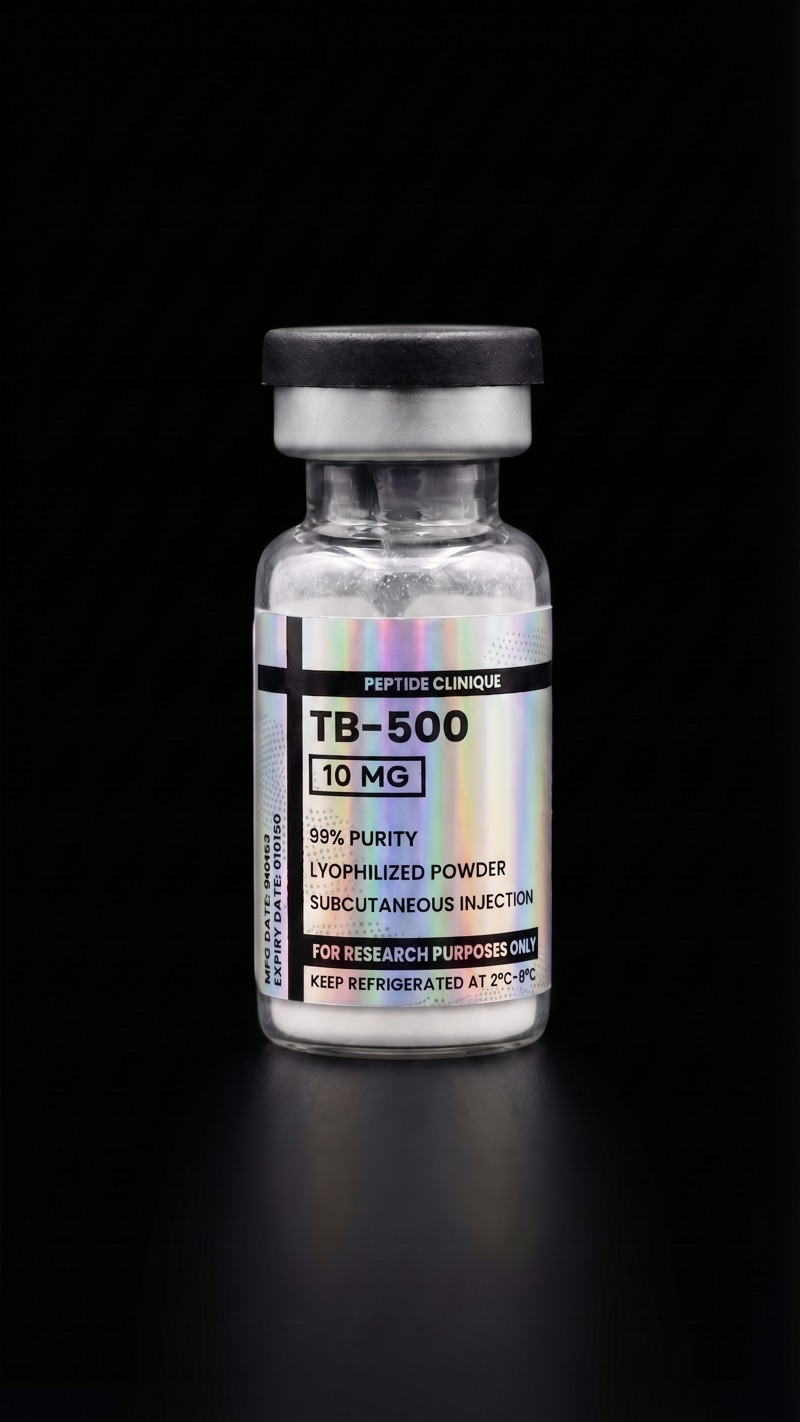
TB-500 10mg
$90.00
Laboratory Grade • High Precision Formula • 10mg
What is TB-500?
TB-500, also known as Thymosin Beta-4, is a naturally occurring peptide found in nearly all human and animal cells. It plays a critical role in building and repairing tissue, particularly muscles, tendons, ligaments, and skin. TB-500 is one of the most studied recovery peptides available today.
Peptide Clinique offers laboratory-grade TB-500 in Canada — tested for 99%+ purity, sourced from ISO-certified labs, and shipped discreetly across the country.
How Does TB-500 Work?
TB-500 promotes cell migration and proliferation by upregulating actin — a key protein involved in muscle formation and repair. It also promotes the growth of new blood vessels (angiogenesis), reduces inflammation, and supports the regeneration of damaged tissue at a cellular level.
Research shows TB-500 is highly versatile — it acts both locally at injury sites and systemically throughout the body, making it effective for a wide range of research applications.
Key Research Benefits
- Faster injury recovery — muscles, tendons, and ligaments
- Reduced inflammation — anti-inflammatory properties at cellular level
- Improved flexibility — supports connective tissue health
- Enhanced endurance — studied in athletic performance research
- Wound healing — accelerates skin and soft tissue repair
- Cardiac tissue repair — emerging research on heart muscle recovery
Research Dosage Guidelines
The following ranges are based on published research. For research purposes only.
| User Profile | Suggested Research Dose | Frequency |
|---|---|---|
| Beginner / First-time researcher | 2.0–2.5 mg | Once or twice per week |
| Intermediate researcher | 2.5–5.0 mg | Twice per week |
| Advanced researcher | 5.0–10 mg | 2–3 times per week |
| Older adults (50+) research models | 2.0–2.5 mg | Once per week — monitor response |
TB-500 requires reconstitution with bacteriostatic water. Store refrigerated after reconstitution.
Who Is TB-500 Research For?
TB-500 research is most relevant for professionals studying:
- Sports injury recovery and rehabilitation
- Connective tissue healing
- Cardiovascular repair
- Wound healing and skin regeneration
Frequently Asked Questions
What is the difference between TB-500 and BPC-157?
Both peptides support healing, but they work differently. TB-500 excels at systemic recovery — it is better for large muscle groups and whole-body repair. BPC-157 is stronger for localized healing, especially gut and joint tissue. They are often researched together for synergistic effects.
Can I buy TB-500 in Canada?
Yes. TB-500 is available as a research peptide in Canada. Peptide Clinique ships TB-500 domestically with fast, discreet delivery.
⚠️ For Research Use Only. Not intended for human consumption. Must be handled by qualified researchers.
Category: Recovery & Healing
Often researched with: BPC-157 | Bacteriostatic Water
← View all Recovery & Healing peptides
Product Information
| Purity | 99%+ |
| Form | Lyophilized Powder |
| Administration | Subcutaneous Injection |
| Storage | Keep Refrigerated at 2°C–8°C |
| MFG Date | 01/01/2026 |
| Expiry Date | 01/01/2030 |
⚠️ FOR RESEARCH PURPOSES ONLY — Not intended for human consumption.
About TB-500: A Comprehensive Research Overview
TB-500 is the synthetic version of Thymosin Beta-4 (Tβ4), a naturally occurring 43-amino-acid peptide that is ubiquitously expressed in nearly all human and animal cells. It is one of the most abundant intracellular peptides in the body, with particularly high concentrations found in wound fluid, blood platelets, and various tissue types involved in repair and remodelling. TB-500 was originally isolated from calf thymus tissue—hence the “T” prefix—but subsequent research has confirmed its widespread expression throughout the body independent of thymic origin.
Our TB-500 10mg is supplied as a lyophilised white powder of ≥99% purity, verified by HPLC and mass spectrometry. Each batch carries a third-party Certificate of Analysis documenting identity, purity, and safety parameters.
Research Background and Discovery
Thymosin Beta-4 was first identified in the 1960s by Allan Goldstein and colleagues at the Albert Einstein College of Medicine, who initially characterised it as a thymic hormone involved in immune cell differentiation. However, it became clear over subsequent decades that the peptide’s biological roles extended far beyond immune regulation. By the 1990s and 2000s, research groups worldwide had documented Tβ4’s involvement in actin sequestration, cell migration, angiogenesis, and tissue-repair cascades.
The synthetic analogue TB-500 is designed to retain the key biological activity of the parent molecule—specifically the actin-binding domain located at amino acid positions 17–23 (LKKTETQ). This short peptide sequence is responsible for many of Tβ4’s repair-promoting properties and is the rationale behind TB-500’s use as a research surrogate for the full 43-amino-acid protein.
Mechanism of Action
TB-500 operates through several well-characterised molecular pathways:
Actin Sequestration and Cell Motility
The defining molecular function of Tβ4—and by extension TB-500—is its role as an actin-sequestering peptide. Actin is the primary structural protein of the cellular cytoskeleton, and its dynamic assembly (polymerisation) and disassembly (depolymerisation) drive cell movement. TB-500 binds to G-actin (monomeric, unpolymerised actin), maintaining a pool of mobile actin that cells can rapidly mobilise for migration. This mechanism is critical for wound healing, as it enables fibroblasts, endothelial cells, and keratinocytes to migrate toward injury sites efficiently.
Angiogenesis Promotion
Multiple preclinical studies have demonstrated that TB-500 promotes angiogenesis—the sprouting of new blood vessels from existing vasculature. This occurs in part through upregulation of VEGF (vascular endothelial growth factor) and direct effects on endothelial cell migration. Increased vascularisation of injured tissue is fundamental to sustained repair, as newly formed blood vessels deliver oxygen, nutrients, and additional repair cells to the wound site.
Anti-Inflammatory Signalling
TB-500 has been shown to downregulate inflammatory cytokines, including TNF-α and IL-6, in animal injury models. By dampening the inflammatory phase of wound healing without abolishing it, TB-500 may reduce tissue damage associated with excessive inflammation while still permitting the immune-mediated clearance of debris and pathogens. This balanced modulation is considered advantageous for promoting the transition from inflammatory to proliferative phases of repair.
Cardiac and Neural Protection
Emerging research has documented cardioprotective and neuroprotective properties of Tβ4/TB-500. In myocardial infarction models, treatment with Tβ4 promoted cardiomyocyte survival, reduced infarct size, and stimulated resident cardiac progenitor cell activation. In spinal cord injury and stroke models, Tβ4 showed neuroregenerative and anti-apoptotic effects, spurring interest in potential neurological applications.
Hair Follicle Activation
TB-500 has also been investigated in the context of hair biology. Research in murine models demonstrated that topical or systemic Tβ4 could stimulate hair follicle stem cell activation and accelerate the transition from telogen (resting) to anagen (growth) phase. This makes it an area of interest for researchers studying alopecia and dermal regeneration.
Purity, Quality, and Analytical Testing
Peptide Clinique’s TB-500 is produced to the highest analytical standards:
- HPLC Purity: ≥99% — confirms peptide identity and absence of synthesis impurities
- Mass Spectrometry (MS): Verifies molecular weight (4963.5 Da) and sequence correctness
- Sterility testing: Each batch tested for bacterial and fungal contamination
- Endotoxin (LAL) testing: Product verified free of pyrogenic bacterial endotoxins
- Residual solvent analysis: Ensures no harmful solvent carry-over from synthesis
All COA documents are publicly available on our Certificates of Analysis page.
Storage Instructions
- Lyophilised (unreconstituted): Store at −20 °C. Stable for up to 24 months when kept dry, dark, and frozen.
- After reconstitution: Refrigerate at 2–8 °C and use within 28 days. Limit freeze-thaw cycles to preserve peptide integrity.
- Light and heat: Protect from UV light and elevated temperatures. Do not store near heating vents or in a warm vehicle.
Reconstitution Guide
TB-500 is supplied as a lyophilised powder. Reconstitute using bacteriostatic water for multi-use research vials:
- Equilibrate the vial to room temperature (5–10 minutes) before opening.
- Disinfect the rubber septa of both vials with 70% isopropyl alcohol. Allow to air-dry.
- Using a sterile syringe, slowly inject the chosen volume of bacteriostatic water down the inner wall of the peptide vial.
- Gently swirl — avoid vigorous shaking, which can cause peptide aggregation.
- The solution should be clear and colourless. Discard if cloudy or precipitate remains.
- Label the vial with reconstitution date and calculated concentration.
Full dosage calculation guidance is available on our Dosage Guide page.
Who Researches TB-500?
TB-500 is relevant to a wide range of scientific disciplines:
- Orthopaedic and sports medicine researchers studying tendon, ligament, and muscle tissue repair
- Cardiac biology labs exploring myocardial protection, stem cell activation, and post-MI repair
- Neuroscience groups investigating neuroprotection and axonal regeneration
- Dermatology researchers studying wound closure, skin regeneration, and hair follicle biology
- Veterinary research groups applying TB-500 in equine and canine musculoskeletal models
All research use must comply with applicable institutional and regulatory guidelines. This product is sold for research purposes only.
Related Products
TB-500 is frequently studied alongside other repair-focused peptides. Explore complementary products:
- BPC-157 10mg — Often co-studied with TB-500 for its complementary tissue-protective and GI-protective properties
- GHK-Cu 50mg — Copper peptide with collagen-promoting and anti-inflammatory properties, relevant in connective tissue repair research
Explore our complete peptide range in the Shop.
Frequently Asked Questions
What is TB-500?
TB-500 is a synthetic version of Thymosin Beta-4, a naturally occurring peptide researched for tissue repair, wound healing, and recovery.
Can I stack TB-500 with BPC-157?
TB-500 and BPC-157 are frequently studied together in research settings. They target different mechanisms and are often combined in recovery research protocols.
What purity is your TB-500?
Our TB-500 is 99%+ purity with a Certificate of Analysis from independent third-party testing available for every batch.
How fast do you ship TB-500 in Canada?
Orders are processed within 24-48 hours. GTA delivery typically arrives in 1-2 business days. Canada-wide shipping takes 2-5 business days.
Be the first to review “TB-500 10mg”
Related products
Reviews
There are no reviews yet.