

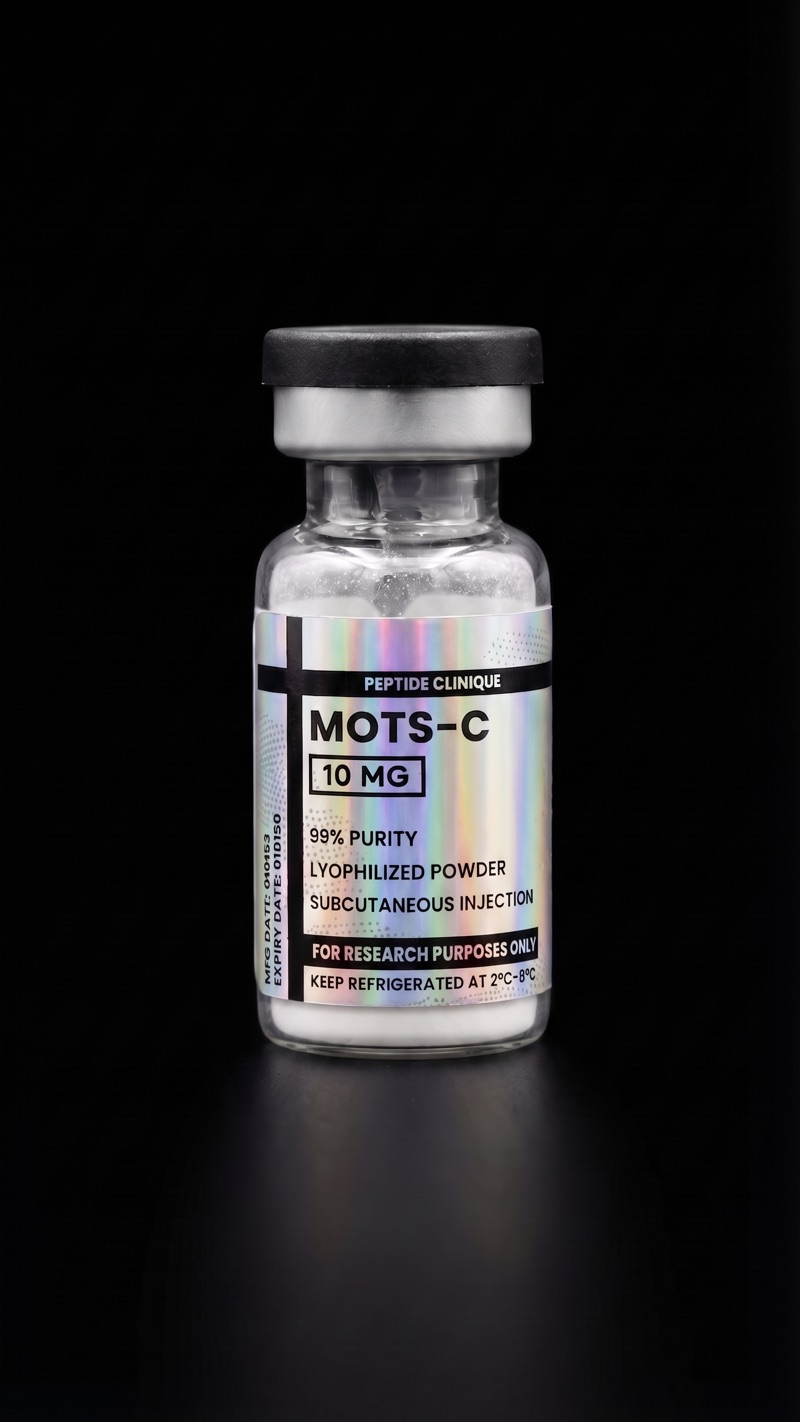
Mot-C 10mg
$70.00
Laboratory Grade • High Precision Formula • 10mg
What is Mot-C (Humanin Analog)?
Mot-C, also known as a Humanin analog, is a mitochondria-derived peptide (MDP) — a fascinating class of small peptides encoded in the mitochondrial genome. Humanin was first discovered in 2001 in surviving brain cells of Alzheimer’s patients. Mot-C is a more potent synthetic analog of Humanin, designed to maximize its biological activity. It represents one of the most exciting frontiers in longevity and cellular health research.
Buy Mot-C in Canada from Peptide Clinique — laboratory-grade, 99%+ purity, with fast domestic shipping.
How Does Mot-C Work?
Mot-C acts on multiple cellular pathways related to survival, energy, and protection. It activates STAT3 signaling, reduces apoptosis (programmed cell death), improves mitochondrial function, and protects neurons from amyloid-beta toxicity. Research suggests it plays a key role in the communication between mitochondria and the nucleus — a process central to cellular aging and longevity.
Key Research Benefits
- Neuroprotection — protects brain cells from Alzheimer’s-related amyloid toxicity
- Cellular longevity — reduces apoptosis and promotes cell survival
- Mitochondrial energy — improves mitochondrial efficiency and ATP production
- Metabolic health — studied for insulin sensitivity and glucose regulation
- Anti-aging at cellular level — counteracts age-related mitochondrial decline
- Cardiovascular protection — shown to protect cardiac cells from stress
Research Dosage Guidelines
| User Profile | Suggested Research Dose | Frequency |
|---|---|---|
| Beginner researcher | 100–200 mcg | Once daily |
| Intermediate researcher | 200–500 mcg | Once daily |
| Advanced longevity researcher | 500 mcg–1 mg | Once daily |
| Neurological / aging research models (50+) | 200–400 mcg | Once daily |
Frequently Asked Questions
What makes Mot-C different from other longevity peptides?
Mot-C is unique because it originates from mitochondrial DNA — the energy center of the cell. Most peptides target receptors on the cell surface. Mot-C works at the deepest level of cellular biology, making it highly relevant to longevity and age-related disease research.
Can I buy Mot-C in Canada?
Yes. Mot-C is available as a research peptide in Canada from Peptide Clinique with fast, discreet domestic shipping.
⚠️ For Research Use Only. Not intended for human consumption. Must be handled by qualified researchers.
Category: Longevity
Often researched with: GHK-Cu | DSIP | Bacteriostatic Water
Product Information
| Purity | 99%+ |
| Form | Lyophilized Powder |
| Administration | Subcutaneous Injection |
| Storage | Keep Refrigerated at 2°C–8°C |
| MFG Date | 01/01/2026 |
| Expiry Date | 01/01/2030 |
⚠️ FOR RESEARCH PURPOSES ONLY — Not intended for human consumption.
Research Background: The Science of Mitochondria-Derived Peptides
Mitochondria-derived peptides (MDPs) represent one of the most significant discoveries in cellular biology of the past two decades. Unlike conventional peptides encoded by nuclear DNA, MDPs are encoded within the small circular genome of the mitochondria itself — the organelle responsible for generating over 90% of cellular energy. Mot-C belongs to this exclusive class of peptides, and research has shown it exhibits remarkable activity in metabolic regulation, neuroprotection, and cellular survival pathways.
The discovery of Humanin in 2001 opened the door to understanding how mitochondrial DNA encodes functional signaling peptides. Mot-C (also referenced in research literature as a potent Humanin analog) was developed through systematic optimization of Humanin’s amino acid sequence. Specifically, the substitution of glycine-14 with serine dramatically enhances its biological potency — studies have shown this modification increases neuroprotective activity by several orders of magnitude compared to the parent compound Humanin.
Researchers at the USC Davis School of Gerontology, along with other leading institutions, have investigated MDPs as potential interventions for age-related decline. Publications in journals such as Nature Communications, Aging Cell, and The Journal of Biological Chemistry have documented Mot-C’s roles in metabolic homeostasis, glucose regulation, and mitochondrial fitness across aging animal models.
Mechanism of Action: How Mot-C Engages Cellular Pathways
Mot-C’s mechanism involves multiple parallel signaling pathways, making it one of the more pleiotropic peptides in current research. Understanding these pathways provides context for the broad range of physiological effects observed in preclinical models:
STAT3 Signaling Activation
One of Mot-C’s primary mechanisms involves activation of the signal transducer and activator of transcription 3 (STAT3) pathway. STAT3 is a transcription factor with wide-ranging effects on cell survival, proliferation, and inflammation modulation. By activating STAT3 phosphorylation, Mot-C promotes transcription of anti-apoptotic genes, effectively shielding cells from programmed death signals. This mechanism is particularly relevant in neurodegenerative disease research.
AMPK Pathway Engagement
Emerging research indicates that Mot-C engages AMP-activated protein kinase (AMPK), often described as the body’s master energy sensor. AMPK activation by Mot-C has been associated with improved glucose uptake, enhanced fatty acid oxidation, and mitochondrial biogenesis — effects that resemble those seen with caloric restriction and exercise. This positions Mot-C as an intriguing subject in metabolic syndrome and type 2 diabetes research models.
Mitochondrial Communication (Retrograde Signaling)
A unique aspect of Mot-C’s biology is its role in retrograde signaling — communication from mitochondria back to the nucleus. As mitochondria accumulate damage during aging, this communication pathway becomes dysregulated. Research suggests Mot-C may help restore proper mitochondrial-nuclear signaling, which could have implications for longevity research and age-related functional decline.
Neuroprotection Against Amyloid-Beta Toxicity
In neural cell models, Mot-C has demonstrated the ability to counteract amyloid-beta (Aβ) induced toxicity — one of the hallmarks of Alzheimer’s disease pathology. The peptide appears to competitively bind to receptors targeted by Aβ and activates protective signaling cascades that prevent neuronal apoptosis. This mechanism has driven significant interest from research groups studying neurodegenerative diseases.
Purity, Quality, and Product Specifications
Peptide Clinique’s Mot-C 10mg vials are produced under strict quality control protocols to ensure research-grade purity. Each batch undergoes third-party testing with Certificates of Analysis available on our certificates of analysis page.
- Purity: ≥99% by HPLC analysis
- Form: Lyophilized (freeze-dried) white powder
- Molecular Weight: Approximately 2,862 Da
- Sequence: Modified 24-amino acid peptide derived from Humanin
- Sterility: Sterile-filtered and aseptically lyophilized
- Testing: Mass spectrometry verification, HPLC purity testing
Explore our full Certificates of Analysis to review third-party lab results for each batch.
Storage Instructions for Mot-C
Proper storage is critical to maintaining the integrity and stability of lyophilized peptides. Follow these evidence-based guidelines for Mot-C:
- Unopened vials: Store at -20°C (freezer) for maximum long-term stability (up to 2+ years)
- Short-term storage: Refrigerate at 2°C–8°C for up to 6 months before reconstitution
- After reconstitution: Store at 2°C–8°C; use within 28 days
- Avoid: Repeated freeze-thaw cycles, direct light exposure, and temperatures above room temperature
- Transport: Keep cool and away from heat sources during transit
Reconstitution Guidelines
Mot-C must be reconstituted before use in research applications. For detailed instructions, see our complete dosage and reconstitution guide. Standard protocol:
- Use sterile Bacteriostatic Water for reconstitution
- Inject the bacteriostatic water slowly down the inside of the vial wall — do not spray directly onto the powder
- Gently swirl the vial until powder dissolves completely — do not shake vigorously
- Allow to sit for 2–3 minutes if powder is slow to dissolve
- Common reconstitution: 2mL BW per 10mg vial yields 5mcg/µL concentration
- Use an insulin syringe (U-100) for precise volumetric measurement
Related Research Compounds
Researchers studying Mot-C often investigate complementary compounds with overlapping or synergistic mechanisms. Consider exploring:
- NAD+ 500mg — A coenzyme central to mitochondrial energy production; often studied alongside Mot-C for synergistic effects on cellular bioenergetics and DNA repair pathways
- Glutathione 1500mg — The master antioxidant that protects mitochondria from oxidative damage; frequently co-researched with mitochondrial peptides like Mot-C to study combined antioxidant and energy effects
Browse our complete peptide catalogue for the full range of research compounds available from Peptide Clinique.
Who Researches Mot-C?
Mot-C is actively studied by a range of research professionals and institutions:
- Longevity researchers — studying mitochondrial health as a central mechanism of biological aging
- Neurologists and neuroscience labs — investigating neuroprotection and Alzheimer’s disease pathology
- Metabolic disease researchers — exploring insulin sensitivity and type 2 diabetes intervention models
- Exercise physiology labs — studying Mot-C’s exercise-mimicking effects on AMPK and muscle metabolism
- Gerontology departments — investigating the role of MDPs in the biology of aging
Frequently Asked Questions
What is MOT-C?
MOT-C (MOTS-c) is a mitochondrial-derived peptide researched for metabolic regulation, exercise mimicry, and cellular energy optimization.
What makes MOT-C unique among peptides?
MOT-C is one of the few peptides encoded by mitochondrial DNA rather than nuclear DNA. Research suggests it may play a role in metabolic homeostasis and insulin sensitivity.
Do you ship MOT-C across Canada?
Yes, we ship MOT-C to all Canadian provinces and territories. GTA orders typically arrive in 1-2 business days.
Be the first to review “Mot-C 10mg”
Related products

Reviews
There are no reviews yet.