

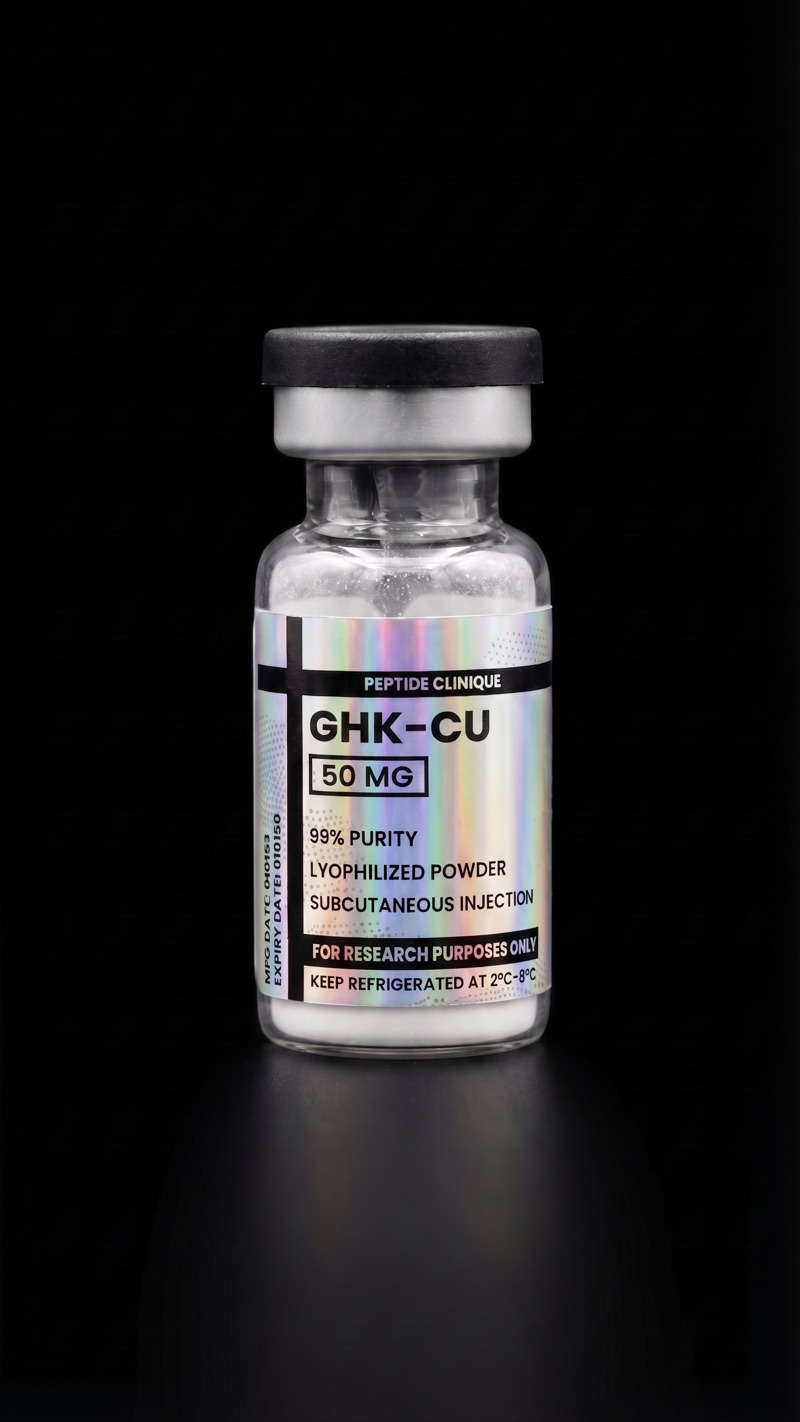
GHK-Cu 50mg
$60.00
Laboratory Grade • High Precision Formula • 50mg
What is GHK-Cu?
GHK-Cu (Copper Peptide) is a naturally occurring tripeptide found in human plasma, saliva, and urine. It consists of the amino acid sequence Glycine-Histidine-Lysine (GHK) bound to copper. GHK-Cu is one of the most studied anti-aging peptides in existence — with over 50 years of research behind it. It is well known in dermatology and regenerative medicine research for its potent skin repair and anti-aging properties.
Buy GHK-Cu in Canada from Peptide Clinique — laboratory-grade, high-purity copper peptide with fast domestic shipping.
How Does GHK-Cu Work?
GHK-Cu works through multiple pathways simultaneously. It stimulates collagen and elastin production, promotes wound healing, activates antioxidant enzymes, and regulates gene expression related to inflammation and tissue repair. Studies have identified GHK-Cu as a gene expression regulator — influencing hundreds of genes related to aging, inflammation, and repair.
Key Research Benefits
- Skin repair and anti-aging — stimulates collagen, elastin, and glycosaminoglycan production
- Wound healing — accelerates closure and tissue remodeling
- Hair growth stimulation — studied for follicle health and hair density
- Anti-inflammatory — reduces inflammatory cytokines in research models
- Antioxidant activity — activates superoxide dismutase and other protective enzymes
- Gene regulation — shown to reset gene expression patterns toward a younger profile
- Nerve regeneration — early research suggests neuroprotective properties
Research Dosage Guidelines
| User Profile | Suggested Research Dose | Frequency |
|---|---|---|
| Topical skin research (all ages) | 0.1–1% concentration solution | Once or twice daily topically |
| Beginner systemic researcher | 0.5–1 mg | Once daily |
| Intermediate researcher | 1–2 mg | Once daily |
| Anti-aging research models (40–70+) | 1 mg | Once daily — assess skin and tissue response |
Frequently Asked Questions
Is GHK-Cu good for anti-aging research?
GHK-Cu is one of the most evidence-backed anti-aging peptides in research. Studies show it can reverse signs of skin aging, stimulate collagen production, and reset age-related gene expression changes.
Can I buy GHK-Cu in Canada?
Yes. GHK-Cu copper peptide is available for research in Canada from Peptide Clinique, with 99%+ purity and fast domestic shipping.
⚠️ For Research Use Only. Not intended for human consumption. Must be handled by qualified researchers.
Category: Anti-Aging & Skin
Often researched with: Mot-C | Bacteriostatic Water
← View all Anti-Aging & Skin peptides
Product Information
| Purity | 99%+ |
| Form | Lyophilized Powder |
| Administration | Subcutaneous Injection |
| Storage | Keep Refrigerated at 2°C–8°C |
| MFG Date | 01/01/2026 |
| Expiry Date | 01/01/2030 |
⚠️ FOR RESEARCH PURPOSES ONLY — Not intended for human consumption.
About GHK-Cu: A Comprehensive Research Overview
GHK-Cu (Glycyl-L-histidyl-L-lysine copper complex) is a naturally occurring tripeptide-copper complex first isolated from human plasma by Loren Pickart in 1973. The peptide component—GHK—is a three-amino-acid sequence (Gly-His-Lys) that binds copper (II) ions with exceptionally high affinity, forming the bioactive GHK-Cu complex. Found in plasma, saliva, and urine, GHK-Cu is most highly concentrated during the wound healing process, where it appears to play a regulatory role in orchestrating tissue repair and remodelling responses.
Our GHK-Cu 50mg is supplied as a lyophilised powder of ≥99% purity, verified by HPLC and mass spectrometry, with each batch accompanied by a Certificate of Analysis.
Research Background and Discovery
Pickart’s initial observation was that human plasma from young individuals contained a factor that stimulated liver cell growth more effectively than plasma from older individuals. That factor proved to be the GHK tripeptide. Subsequent decades of research by Pickart and other groups revealed a molecule of extraordinary biological versatility: GHK-Cu influences gene expression across hundreds of genes, promotes wound healing, stimulates collagen and glycosaminoglycan synthesis, exhibits anti-inflammatory properties, functions as an antioxidant, and demonstrates intriguing effects on skin biology at the cellular level.
A landmark genomics study published by Pickart et al. found that GHK-Cu modulates over 4,000 human genes—approximately 31% of the human transcriptome—with a particularly pronounced effect on genes related to DNA repair, ubiquitin/proteasome-mediated protein quality control, and immune function. This extraordinarily broad transcriptional influence has positioned GHK-Cu as a major research subject in ageing biology and regenerative medicine.
Mechanism of Action
Copper Delivery and Enzymatic Activation
GHK acts as a copper chaperone, transporting Cu²⁺ ions into cells and tissues where copper-dependent enzymes are active. Key copper enzymes include lysyl oxidase (essential for collagen and elastin cross-linking), superoxide dismutase (antioxidant defence), and cytochrome c oxidase (mitochondrial energy production). By increasing local copper bioavailability, GHK-Cu supports the activity of these enzymes, contributing to structural protein synthesis and cellular energy metabolism.
Collagen and Extracellular Matrix Stimulation
Multiple in vitro and in vivo studies demonstrate that GHK-Cu stimulates the synthesis of collagen types I, III, and IV, as well as elastin, fibronectin, and proteoglycans. These structural proteins form the scaffold of skin, connective tissue, and blood vessel walls. In wound healing models, GHK-Cu treatment consistently produces faster wound closure, improved tensile strength of healed tissue, and reduced scar formation compared to untreated controls.
Anti-Inflammatory Modulation
GHK-Cu downregulates inflammatory cytokines including TNF-α, IL-6, and IL-1β, while upregulating anti-inflammatory mediators. This modulation helps prevent the transition from acute, productive inflammation to chronic, tissue-degrading inflammation—a critical distinction in wound healing and chronic skin conditions. The anti-inflammatory effect has been studied in the context of UV-induced skin damage, acne-related inflammation, and inflammatory dermatoses.
Antioxidant Properties
GHK-Cu scavenges free radicals directly and enhances cellular antioxidant enzyme expression (superoxide dismutase, catalase). Oxidative stress is a major driver of cellular ageing, collagen degradation, and tissue dysfunction. By reducing oxidative burden, GHK-Cu contributes to cellular longevity and tissue maintenance—a mechanism particularly relevant to skin ageing research.
DNA Repair and Gene Expression
Research has shown that GHK-Cu activates genes involved in DNA damage recognition and repair, including those encoding nucleotide excision repair proteins. The peptide also upregulates genes in the ubiquitin-proteasome pathway, which clears damaged and misfolded proteins from cells. These genome-maintenance activities are highly relevant to ageing research, where accumulated DNA damage and protein aggregation drive tissue decline.
Nerve Growth Factor (NGF) Upregulation
GHK-Cu has been shown to upregulate NGF expression, which is relevant to skin innervation, neuronal survival in wound beds, and the recovery of sensory function after injury. This neural aspect of GHK-Cu’s biology is less studied than its structural effects but represents an emerging area of interest.
Purity, Quality, and Analytical Testing
- HPLC Purity: ≥99%
- Mass Spectrometry: Confirms molecular weight (340.4 Da for GHK, 403.9 Da for GHK-Cu) and complex formation
- ICP-MS (Inductively Coupled Plasma MS): Verifies copper content and ratio in the complex
- Endotoxin testing: LAL method, verified below research-grade acceptance limits
- Sterility testing: Standard microbiological testing protocol
Download the full analysis on our Certificates of Analysis page.
Storage Instructions
- Lyophilised: Store at −20 °C in a dark, dry environment. Stable for up to 24 months.
- Reconstituted: Store at 2–8 °C and use within 28 days. GHK-Cu solutions have a characteristic light-blue colour due to the copper complex—this is normal and expected.
- Avoid: Exposure to strong UV light, which can degrade the copper-peptide complex over time.
Reconstitution Guide
- Allow the vial to warm to room temperature.
- Disinfect the rubber stopper with an isopropyl alcohol swab.
- Slowly inject bacteriostatic water or sterile PBS along the vial wall.
- Gently swirl until fully dissolved. The resulting solution should be clear to light blue — colour intensity correlates with copper content and is expected.
- Label with date and concentration.
See our Dosage Guide for research concentration recommendations.
Who Researches GHK-Cu?
- Dermatology and skin biology researchers studying ageing, wound healing, and photoprotection
- Gerontology labs investigating ageing biomarkers, cellular senescence, and longevity pathways
- Plastic surgery and burn research groups studying scarring and tissue remodelling
- Genomics researchers studying broad transcriptional effects and gene regulatory networks
- Hair biology labs investigating follicle regeneration and alopecia models
For research use only. Not for human consumption.
Related Products
- BPC-157 10mg — Tissue repair and cytoprotective peptide frequently co-studied with GHK-Cu in wound healing research
- AHK-Cu — A closely related copper peptide with overlapping but distinct receptor interactions relevant to hair and skin biology (see our Shop for availability)
Explore our full peptide catalogue in the Shop.
Frequently Asked Questions
What is GHK-Cu?
GHK-Cu is a naturally occurring copper peptide researched for its potential anti-aging, skin repair, and wound healing properties.
Do you provide COA for GHK-Cu?
Yes, every batch of GHK-Cu comes with a Certificate of Analysis from independent third-party laboratory testing confirming 99%+ purity.
Reviews
There are no reviews yet.