

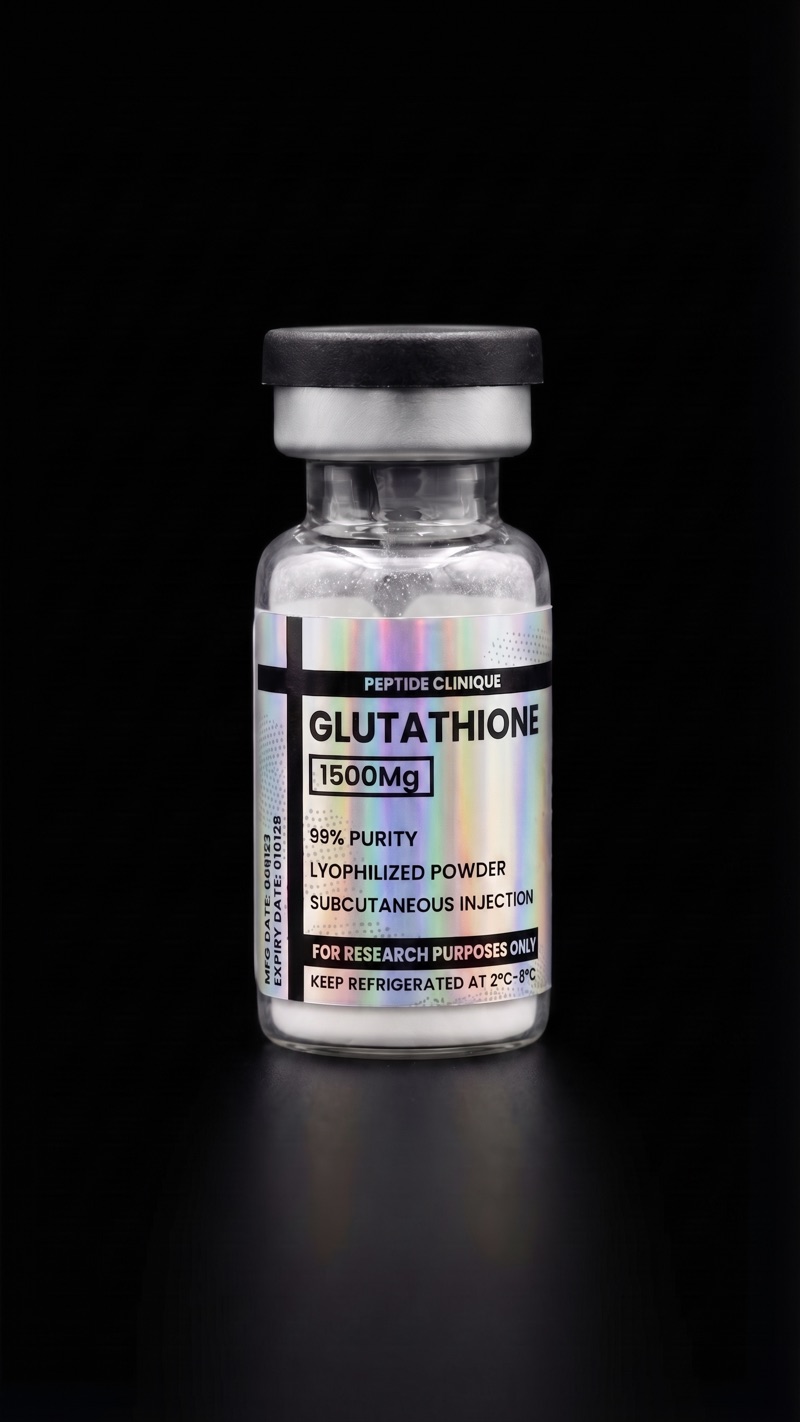
Glutathione 1500mg
$70.00
Laboratory Grade • High Precision Formula • 1500mg
What is Glutathione?
Glutathione is the body’s master antioxidant — a tripeptide composed of glutamine, cysteine, and glycine produced naturally in every cell. It is essential for neutralizing free radicals, detoxifying harmful compounds, supporting immune function, and maintaining cellular health. Glutathione levels decline with age, stress, and disease, making replenishment a key area of longevity and anti-aging research.
Peptide Clinique offers pharmaceutical-grade Glutathione in Canada — 99%+ purity, lyophilized powder, fast domestic shipping.
How Does Glutathione Work?
Glutathione works by directly neutralizing reactive oxygen species (ROS) and free radicals, preventing oxidative damage to cells, DNA, and proteins. It also regenerates other antioxidants like Vitamin C and E, supports liver detoxification pathways, and plays a critical role in immune cell function and inflammatory regulation.
Key Research Benefits
- Master antioxidant — neutralizes free radicals and oxidative stress
- Skin brightening — researched for melanin inhibition and skin tone
- Liver detoxification — supports Phase II liver detox pathways
- Immune support — critical for T-cell function and immune response
- Anti-aging — protects mitochondria and DNA from oxidative damage
- Neurological protection — studied in models of neurodegenerative disease
Research Dosage Guidelines
| User Profile | Suggested Research Dose | Frequency |
|---|---|---|
| Beginner researcher | 600–900 mg | Once daily |
| Intermediate researcher | 1200 mg | Once daily |
| Advanced researcher | 1500 mg | Once daily or divided doses |
Frequently Asked Questions
Can I buy Glutathione in Canada?
Yes. Research-grade Glutathione is available from Peptide Clinique in Canada with 99%+ purity and fast domestic shipping.
What is the difference between oral and IV Glutathione?
IV or subcutaneous delivery bypasses digestive breakdown and delivers Glutathione directly into circulation for research purposes. Oral glutathione has lower bioavailability.
⚠️ For Research Use Only. Not intended for human consumption. Must be handled by qualified researchers.
Product Information
| Purity | 99%+ |
| Form | Lyophilized Powder |
| Administration | Subcutaneous Injection |
| Storage | Keep Refrigerated at 2°C–8°C |
| MFG Date | 01/01/2026 |
| Expiry Date | 01/01/2030 |
⚠️ FOR RESEARCH PURPOSES ONLY — Not intended for human consumption.
Research Background: Glutathione as the Body’s Master Antioxidant
Glutathione (GSH) is a tripeptide composed of three amino acids — cysteine, glycine, and glutamic acid — that serves as the most abundant and important endogenous antioxidant in the human body. Unlike dietary antioxidants such as vitamins C and E, glutathione is synthesized directly within cells, particularly in the liver, and operates at the core of the body’s antioxidant defense network. It is found in every cell, with particularly high concentrations in the liver, lungs, and immune cells.
Interest in glutathione supplementation and restoration has grown substantially in recent years, driven by research demonstrating that glutathione levels decline steadily with age and are depleted by chronic stress, illness, poor nutrition, toxin exposure, and intense physical exertion. Published studies in Free Radical Biology and Medicine, The Journal of Nutrition, and Antioxidants & Redox Signaling have highlighted glutathione’s central role in detoxification, immune function, and protection against age-related oxidative damage.
Glutathione deficiency has been associated with numerous chronic conditions in research models, including neurodegenerative diseases, cardiovascular disease, diabetes, and accelerated aging. Conversely, maintaining robust glutathione status appears to support cellular longevity and resilience in multiple biological systems.
Mechanism of Action: How Glutathione Protects Cells
Direct Free Radical Scavenging
Glutathione’s free thiol group (-SH) on the cysteine residue is chemically reactive with reactive oxygen species (ROS), reactive nitrogen species (RNS), and other free radicals. In this direct antioxidant action, glutathione donates a hydrogen atom to neutralize free radicals, converting them to less reactive species. Two molecules of glutathione are oxidized to form glutathione disulfide (GSSG), which is then recycled back to GSH by the enzyme glutathione reductase using NADPH as a cofactor.
Regeneration of Other Antioxidants
Glutathione plays a critical role in regenerating vitamins C and E after they have been oxidized in the process of neutralizing free radicals. Vitamin C (ascorbate) oxidizes to dehydroascorbate when it scavenges a radical; glutathione reduces it back to active ascorbate. This antioxidant network interdependence makes glutathione a force multiplier for the entire cellular antioxidant system.
Phase II Detoxification and Conjugation
The liver uses glutathione extensively in Phase II detoxification reactions. Glutathione S-transferases (GSTs) catalyze the conjugation of glutathione to a wide range of electrophilic compounds — including heavy metals, xenobiotics, carcinogens, and drug metabolites — facilitating their water-solubilization and excretion. This mechanism is central to research on hepatotoxicity, environmental toxin clearance, and pharmaceutical metabolism.
Thioredoxin System Support
Glutathione works in concert with the thioredoxin system to maintain the proper redox environment within cells. Together, these systems regulate protein folding, enzyme activity, and redox-sensitive signaling cascades. Disruption of this balance (oxidative stress) is associated with inflammation and cellular dysfunction across virtually every organ system.
Immune Cell Support
Lymphocytes and other immune cells are particularly dependent on glutathione for proliferation and function. Research has shown that glutathione depletion impairs T-cell activation, cytokine production, and natural killer cell activity. Maintaining adequate glutathione levels is associated with enhanced immune competence in multiple preclinical models.
Purity, Quality, and Product Specifications
Peptide Clinique’s Glutathione 1500mg is produced to exacting pharmaceutical standards. Each lot is independently verified for purity and potency.
- Form: L-Glutathione (reduced form, GSH) — the biologically active form
- Purity: ≥99% by HPLC analysis
- Molecular Weight: 307.32 g/mol
- CAS Number: 70-18-8
- Appearance: White to off-white lyophilized powder
- Testing: Third-party HPLC, mass spectrometry, and heavy metals screening
Access batch-specific Certificates of Analysis for Glutathione 1500mg.
Storage Instructions for Glutathione
Reduced glutathione (GSH) is sensitive to oxidation and must be stored carefully to maintain its reduced, active form:
- Lyophilized powder (unopened): Store at -20°C; keep sealed and dry
- Short-term storage: 2°C–8°C for up to 3 months; minimize oxygen exposure
- After reconstitution: Use promptly; maximum stability at acidic pH (pH 4–5)
- Important: Reconstituted glutathione oxidizes relatively quickly; prepare only what is needed for immediate use
- Avoid: Oxidizing agents, high pH solutions, and repeated freeze-thaw cycles
Reconstitution Guidelines for Glutathione
Refer to the complete dosage guide for protocol details. General reconstitution notes:
- Use sterile Bacteriostatic Water for reconstitution
- Glutathione dissolves readily in aqueous solution
- Add water slowly down the vial wall; gently swirl until fully dissolved
- Solution should be clear to slightly yellow — yellow tint is normal
- A brownish or cloudy solution indicates oxidation; discard and use a fresh preparation
- Common research concentration: 5mL BW per 1500mg vial (300mg/mL)
Related Research Compounds
Glutathione research often involves investigation of complementary compounds:
- NAD+ 500mg — NADPH (derived from the NAD+ pathway) is the cofactor required to regenerate oxidized glutathione back to its reduced active form; NAD+ and glutathione are functionally linked in cellular redox maintenance
- GHK-Cu 50mg — A copper peptide with its own antioxidant and tissue remodeling properties; researchers study GHK-Cu alongside glutathione for combined anti-aging and regenerative effects in skin and tissue research models
Browse the full selection at our research peptide shop.
Who Researches Glutathione?
- Hepatology researchers — studying liver detoxification, NAFLD, and hepatotoxicity models
- Neurodegenerative disease labs — investigating oxidative stress in Parkinson’s and Alzheimer’s pathology
- Oncology researchers — studying glutathione’s role in chemotherapy resistance and cancer cell redox biology
- Immunology labs — exploring glutathione’s role in immune cell activation and function
- Anti-aging and longevity researchers — investigating glutathione decline as a marker and driver of aging
- Sports science researchers — studying exercise-induced oxidative stress and antioxidant recovery
Frequently Asked Questions
What is Glutathione?
Glutathione is a tripeptide antioxidant naturally produced in the body. It is researched for its role in cellular protection, detoxification, and oxidative stress reduction.
Why 1500mg dosage?
The 1500mg format provides a research-grade quantity suitable for extended study protocols. Each vial is independently tested for 99%+ purity.
How should Glutathione be stored?
Store lyophilized Glutathione at -20°C. Once reconstituted with bacteriostatic water, refrigerate at 2-8°C and use within 30 days.
Reviews
There are no reviews yet.