

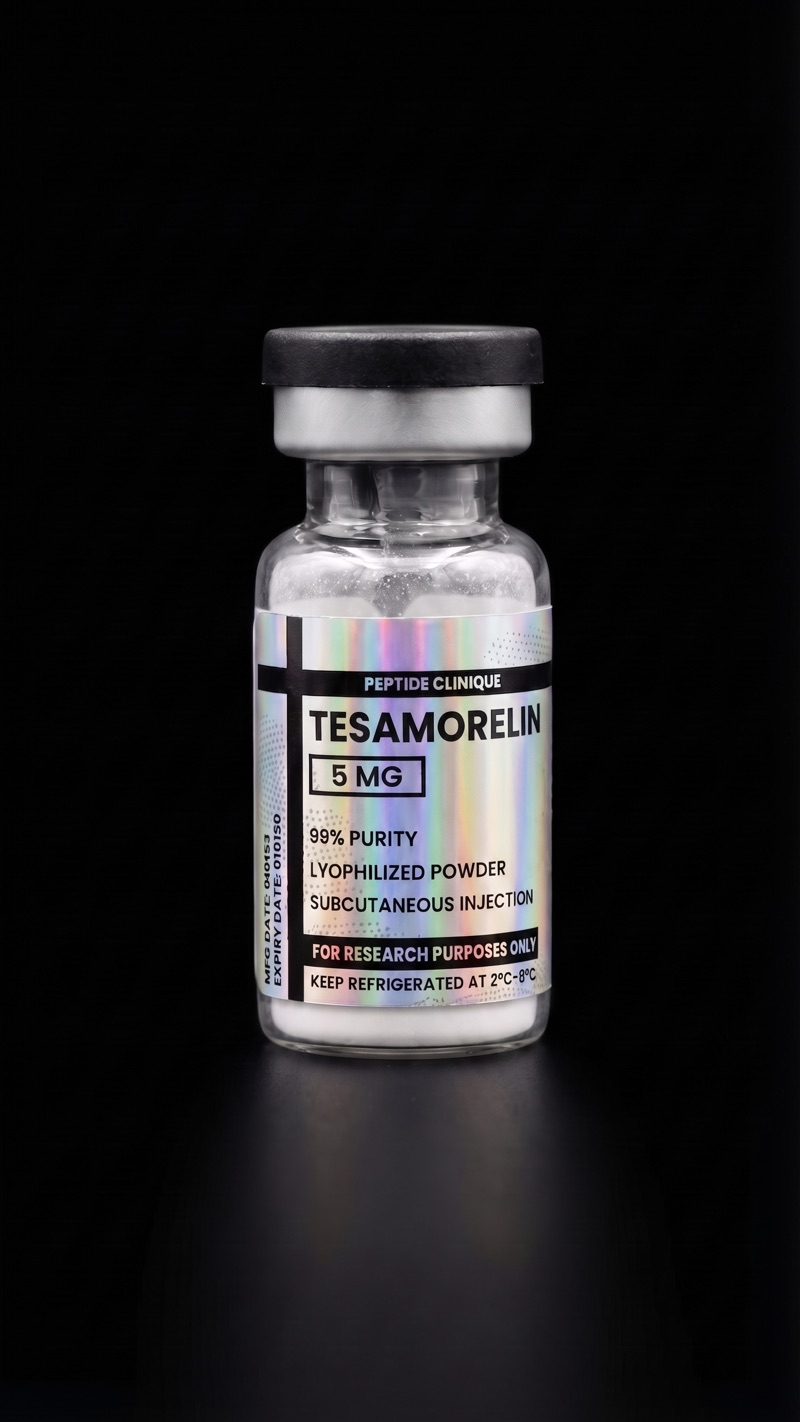
Tesamorelin 5mg
$90.00
Laboratory Grade • High Precision Formula • 10mg
What is Tesamorelin?
Tesamorelin is a synthetic analog of Growth Hormone-Releasing Hormone (GHRH). It is one of the most clinically studied peptides in the world, with an FDA-approved medical application for reducing excess abdominal fat in HIV patients. For researchers, Tesamorelin offers a powerful, well-documented tool for studying growth hormone stimulation, body composition, and metabolic health.
Peptide Clinique offers Tesamorelin in Canada — lab-certified, high-purity research grade with fast domestic delivery.
How Does Tesamorelin Work?
Tesamorelin binds to GHRH receptors in the pituitary gland, stimulating the natural production and release of growth hormone. Because it mimics the body’s own GHRH signal, it produces a more physiological GH pulse compared to direct GH injections. This translates to improved metabolic effects with a lower risk of GH-related side effects.
Key Research Benefits
- Growth hormone stimulation — strong, natural GHRH-mediated GH release
- Body composition improvement — reduction of visceral (abdominal) fat in research models
- Metabolic health — improved lipid profiles and insulin sensitivity in studies
- Cognitive function — emerging research on brain health and memory in aging models
- Muscle preservation — supports lean mass through GH elevation
- Cardiovascular markers — studied for improvements in cholesterol levels
Research Dosage Guidelines
| User Profile | Suggested Research Dose | Frequency |
|---|---|---|
| Beginner researcher | 1 mg | Once daily |
| Intermediate researcher | 1–2 mg | Once daily |
| Advanced researcher | 2 mg | Once daily (morning or evening) |
| Metabolic / aging research (40–70+) | 1 mg | Once daily — monitor IGF-1 levels |
Frequently Asked Questions
How is Tesamorelin different from Ipamorelin?
Tesamorelin is a GHRH analog — it directly stimulates the GHRH receptor. Ipamorelin is a GHRP (ghrelin mimetic) that acts on a different receptor. They are often studied together for additive GH release effects.
Can I buy Tesamorelin in Canada?
Yes. Tesamorelin is available as a research peptide in Canada from Peptide Clinique, with 99%+ purity and discreet shipping.
⚠️ For Research Use Only. Not intended for human consumption. Must be handled by qualified researchers.
Category: Growth Hormone
Often researched with: Ipamorelin | Bacteriostatic Water
← View all Growth Hormone peptides
Product Information
| Purity | 99%+ |
| Form | Lyophilized Powder |
| Administration | Subcutaneous Injection |
| Storage | Keep Refrigerated at 2°C–8°C |
| MFG Date | 01/01/2026 |
| Expiry Date | 01/01/2030 |
⚠️ FOR RESEARCH PURPOSES ONLY — Not intended for human consumption.
About Tesamorelin: A Comprehensive Research Overview
Tesamorelin (TH9507) is a synthetic analogue of endogenous growth hormone-releasing hormone (GHRH), consisting of the full 44-amino-acid GHRH(1-44) sequence linked to a trans-3-hexenoic acid moiety at the N-terminus. This chemical modification confers significantly greater metabolic stability than native GHRH, extending the compound’s effective duration of action and making it a practical research tool for studying sustained GH-axis stimulation. Tesamorelin was approved by the US FDA in 2010 under the brand name Egrifta for the treatment of HIV-associated lipodystrophy—making it one of the few GHRH analogues with a validated regulatory history, and providing researchers with a substantial base of human clinical trial data.
Our Tesamorelin 5mg is supplied as lyophilised powder of ≥98% purity, verified by HPLC and mass spectrometry. Each batch includes a downloadable Certificate of Analysis.
Research Background and Development History
GHRH was first characterised in 1982 by two groups simultaneously—those of Roger Guillemin and Wylie Vale—as the primary hypothalamic peptide driving pituitary GH secretion. Native GHRH has a half-life of only a few minutes in circulation due to rapid cleavage by dipeptidyl peptidase-IV (DPP-IV) and other peptidases. Early research with native GHRH analogues was therefore limited by the need for continuous infusion or frequent dosing. Tesamorelin’s trans-3-hexenoic acid modification provides resistance to DPP-IV cleavage at the N-terminal region, substantially extending the effective half-life and enabling once-daily subcutaneous dosing in clinical trial settings.
Theratechnologies (the developer of tesamorelin) conducted a robust Phase 3 clinical programme that demonstrated significant reductions in visceral adipose tissue (VAT) in HIV-positive individuals on antiretroviral therapy. The pivotal trials showed approximately 15–18% reductions in VAT as measured by CT scan over 26 weeks. Subsequent research has examined tesamorelin’s effects in non-HIV populations, including metabolic syndrome, ageing-related GH decline, and non-alcoholic fatty liver disease.
Mechanism of Action
GHRH Receptor Agonism
Tesamorelin binds and activates the GHRH receptor (GHRHR) on somatotroph cells in the anterior pituitary. GHRHR is a Gs protein-coupled receptor that, upon activation, stimulates adenylate cyclase, raises intracellular cAMP, and activates protein kinase A (PKA). PKA signalling drives both GH synthesis (via transcription factor activation) and GH secretion (via exocytosis of secretory granules). This is mechanistically distinct from ghrelin/GHS-R1a agonists such as ipamorelin, which activate GH release through Gq/Ca²⁺ signalling. The two pathways converge synergistically at the pituitary somatotroph.
Physiological GH Pulse Preservation
A key feature of GHRH-based secretagogues is that they stimulate GH release in a pulsatile, physiologically modulated fashion rather than producing a continuous, supra-physiological GH elevation. The somatostatin “brake” system remains intact: hypothalamic somatostatin release will still suppress GH during inter-pulse troughs, preserving some degree of the natural pulsatile GH pattern. This is considered preferable in research contexts where GH axis dynamics (rather than simple GH elevation) are under study.
IGF-1 Induction and Downstream Anabolic Effects
Tesamorelin-stimulated GH secretion drives hepatic IGF-1 production. IGF-1 is the primary mediator of GH’s peripheral anabolic effects: it promotes protein synthesis, nitrogen retention, fat mobilisation (lipolysis in adipocytes), and bone formation. In clinical trial data, tesamorelin was associated with significant increases in IGF-1 levels alongside reductions in visceral fat, providing a direct biomarker of target engagement.
Lipolysis and Visceral Adipose Tissue Reduction
GH has direct lipolytic effects on adipocytes, particularly visceral adipose tissue depots, which express higher densities of GH receptors than subcutaneous fat. Tesamorelin-driven GH pulses therefore selectively mobilise visceral fat—a finding with considerable relevance to metabolic risk research, as visceral adiposity is strongly associated with cardiometabolic disease, hepatic steatosis, and insulin resistance.
Hepatic and Metabolic Effects
Research in non-HIV populations has examined tesamorelin’s effects on liver fat. A randomised trial in HIV-positive adults found significant reductions in liver fat fraction (measured by MRI proton spectroscopy), raising interest in GHRH analogues as potential tools in NAFLD/NASH research. Improvements in triglycerides and some inflammatory markers have also been reported in tesamorelin-treated subjects, consistent with the metabolic consequences of visceral fat reduction.
Purity, Quality, and Analytical Testing
- HPLC Purity: ≥98% — appropriate for this long, complex 44-amino-acid peptide
- Mass Spectrometry: Confirms molecular weight (~5135 Da with trans-3-hexenoic acid modification) and sequence integrity
- Endotoxin (LAL) testing: Below research-grade acceptance limits
- Sterility: Microbiological testing per standard protocols
Download the full analytical report at Certificates of Analysis.
Storage Instructions
- Lyophilised: Store at −20 °C. Stable up to 24 months. Avoid moisture.
- Reconstituted: Refrigerate at 2–8 °C. Use within 21–28 days. Do not freeze reconstituted solution.
- Handling: Allow vials to reach room temperature before opening to avoid moisture condensation. Tesamorelin is sensitive to repeated temperature cycling.
Reconstitution Guide
- Allow the sealed vial to equilibrate to room temperature.
- Disinfect the rubber stopper with 70% isopropyl alcohol swab.
- Slowly inject bacteriostatic water or sterile saline down the inner vial wall.
- Swirl gently until fully dissolved. Solution should be clear and colourless.
- Do not use if the solution is turbid or contains visible particles.
- Label with reconstitution date and concentration.
Volume and concentration guidance is available on our Dosage Guide.
Who Researches Tesamorelin?
- Metabolic disease researchers studying visceral adiposity, insulin sensitivity, and lipid metabolism
- Hepatology labs investigating NAFLD, liver fat accumulation, and GH-axis effects on hepatic metabolism
- Endocrinology researchers studying GH deficiency, GHRH receptor pharmacology, and GH axis ageing
- HIV/antiretroviral research groups studying lipodystrophy management and metabolic complications
- Geroscience labs examining GH decline in ageing and its body composition consequences
For research use only. Not for human consumption.
Related Products
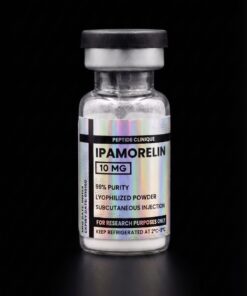
- Ipamorelin 10mg — GHS-R1a agonist that works via a complementary pituitary signalling pathway; frequently studied alongside GHRH analogues for synergistic GH stimulation
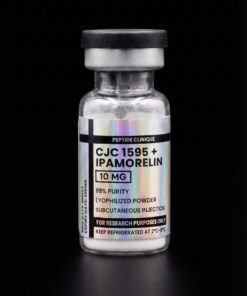
- CJC-1295 + Ipamorelin blend — Pre-formulated combination of a GHRH analogue with a GHS-R1a agonist, available in our Shop
Browse our full range at Shop.
Frequently Asked Questions
What is Tesamorelin?
Tesamorelin is a growth hormone-releasing hormone (GHRH) analog peptide. It is researched for its effects on growth hormone secretion and body composition.
How does Tesamorelin differ from Ipamorelin?
Tesamorelin is a GHRH analog that stimulates the pituitary to release GH, while Ipamorelin is a ghrelin mimetic. They work through different receptor pathways.
What purity is your Tesamorelin?
Our Tesamorelin is 99%+ purity with third-party COA verification. Independently tested by accredited laboratories.
Reviews
There are no reviews yet.