

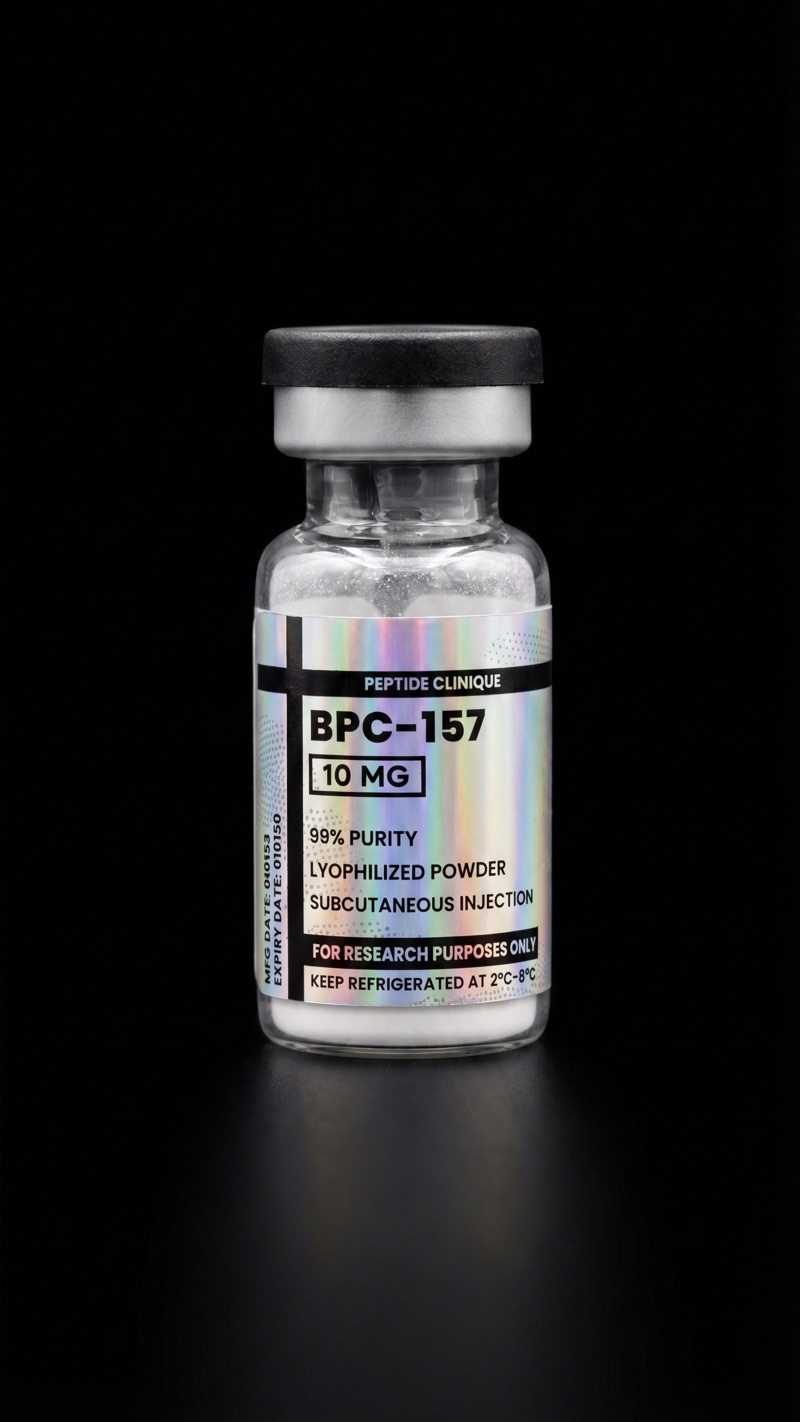
BPC-157 10mg
$70.00
Laboratory Grade • High Precision Formula • 10mg
What is BPC-157?
BPC-157 (Body Protection Compound 157) is one of the most researched peptides in the world. It is a synthetic peptide derived from a protein naturally found in the human stomach. Researchers have studied BPC-157 extensively for its remarkable ability to support tissue repair, reduce inflammation, and accelerate recovery from injury.
If you are looking to buy BPC-157 in Canada for research purposes, Peptide Clinique offers laboratory-grade BPC-157 at 99%+ purity — sourced from ISO-certified facilities and tested for quality you can rely on.
How Does BPC-157 Work?
BPC-157 works by promoting angiogenesis (the formation of new blood vessels), upregulating growth hormone receptors, and activating key repair pathways in the body. Research suggests it interacts directly with the nitric oxide system, which plays a central role in healing and inflammation control.
Unlike many compounds, BPC-157 has been shown to be effective both locally (applied near an injury site) and systemically (acting throughout the body), making it one of the most versatile peptides studied to date.
Key Research Benefits
- Accelerated tissue repair — tendons, ligaments, muscles, and bone
- Gut healing — studied for inflammatory bowel conditions and leaky gut
- Anti-inflammatory effects — reduces swelling and pain signals
- Neuroprotection — research suggests brain and nerve healing potential
- Joint health — supports cartilage and connective tissue repair
- Improved recovery time — widely studied in sports recovery research
Research Dosage Guidelines
The following dosage ranges are based on published research studies. This information is provided for educational and research purposes only.
| User Profile | Suggested Research Dose | Frequency |
|---|---|---|
| Beginner / First-time researcher | 200–250 mcg | Once daily |
| Intermediate researcher | 250–500 mcg | Once or twice daily |
| Advanced researcher | 500–1000 mcg | Twice daily |
| Older adults (50+) research models | 250–500 mcg | Once daily — monitor closely |
Note: BPC-157 is typically reconstituted with bacteriostatic water before use. Always follow sterile research protocols.
Who Is BPC-157 Research For?
BPC-157 research is relevant for scientists and professionals studying:
- Sports medicine and injury recovery
- Gastrointestinal repair and gut health
- Anti-inflammatory pathways
- Neurological healing and neuroprotection
Frequently Asked Questions
What is BPC-157 used for in research?
BPC-157 is primarily researched for tissue repair, gut healing, and anti-inflammatory effects. It has shown strong results in animal models for healing tendons, muscles, ligaments, and the digestive tract.
Can I buy BPC-157 in Canada?
Yes. BPC-157 is available for purchase in Canada as a research peptide. Peptide Clinique supplies laboratory-grade BPC-157 with fast domestic shipping across Canada.
How do I reconstitute BPC-157?
BPC-157 is reconstituted using bacteriostatic water. Add the water slowly to the lyophilized powder using a sterile syringe, swirl gently (do not shake), and store refrigerated.
⚠️ For Research Use Only. Not intended for human consumption. Must be handled by qualified researchers.
Category: Recovery & Healing
Often researched with: TB-500 | Bacteriostatic Water
← View all Recovery & Healing peptides
Product Information
| Purity | 99%+ |
| Form | Lyophilized Powder |
| Administration | Subcutaneous Injection |
| Storage | Keep Refrigerated at 2°C–8°C |
| MFG Date | 01/01/2026 |
| Expiry Date | 01/01/2030 |
⚠️ FOR RESEARCH PURPOSES ONLY — Not intended for human consumption.
About BPC-157: A Comprehensive Research Overview
BPC-157 (Body Protection Compound-157) is a synthetic pentadecapeptide consisting of 15 amino acids. It is a partial sequence derived from a naturally occurring protective protein found in human gastric juice, first isolated and characterized in the early 1990s by Croatian researchers at the University of Zagreb. Since its discovery, BPC-157 has become one of the most extensively studied peptides in preclinical research, owing to its remarkable stability in biological fluids and its broad-spectrum cytoprotective properties across multiple tissue types.
Our BPC-157 10mg is supplied as a lyophilized (freeze-dried) white powder of ≥99% purity, tested by HPLC and mass spectrometry. Each vial is manufactured under strict quality-control conditions and is accompanied by a third-party Certificate of Analysis available for download on our COA page.
Research Background and Discovery
The peptide’s parent protein—BPC, or Body Protection Compound—is endogenously produced in the stomach lining and plays a role in mucosal defence and repair. BPC-157 represents a stable, 15-amino-acid fragment of this larger protein and was first synthesised to explore its cytoprotective potential beyond the gastrointestinal tract. Early animal studies demonstrated that BPC-157 remained active even after oral administration, a property unusual for peptides given their typical vulnerability to proteolytic degradation in the digestive system. This stability made BPC-157 an attractive research subject for systemic repair mechanisms.
Peer-reviewed publications beginning in the mid-1990s documented the peptide’s capacity to accelerate healing of tendon-to-bone injuries, muscle tears, and ligament damage in rodent models. Research groups subsequently expanded the scope to include central nervous system injuries, liver damage, cardiovascular protection, corneal healing, and inflammatory bowel conditions—building a substantial body of literature that continues to grow today.
Mechanism of Action
BPC-157’s precise mechanism of action involves several converging pathways:
Nitric Oxide (NO) Signalling
One of the most consistently reported mechanisms is BPC-157’s modulation of the nitric oxide system. Studies indicate that BPC-157 influences NO synthesis in a context-dependent manner—upregulating it in ischaemic tissues to promote vasodilation and blood flow restoration, while modulating excessive NO production in inflammatory states. This dual role may underlie many of its tissue-protective effects.
Growth Factor Upregulation
Preclinical data show that BPC-157 promotes the expression of growth hormone receptors and upregulates key growth factors, including vascular endothelial growth factor (VEGF) and early growth response protein 1 (EGR-1). VEGF stimulation drives angiogenesis—the formation of new blood vessels—which is critical for delivering oxygen and nutrients to injured tissue. EGR-1 upregulation influences collagen gene expression, tendon fibroblast migration, and wound closure.
FKBP12 and mTOR Pathway Interaction
Research has suggested interactions with the FKBP12 protein and downstream mTOR signalling. These pathways are integral to cellular proliferation, protein synthesis, and inflammatory regulation. BPC-157’s apparent modulation of these cascades may partly explain its systemic effects beyond the site of administration.
Tendon and Ligament Fibroblast Activity
In vitro and in vivo studies demonstrate that BPC-157 accelerates the proliferation and migration of tendon fibroblasts in a dose-dependent manner. Fibroblasts are the cells responsible for producing collagen and extracellular matrix components essential for structural tissue repair. Enhanced fibroblast activity translates, in animal models, to faster tendon-to-bone reattachment and stronger tensile strength of healed tendons.
Gastrointestinal Cytoprotection
Given its origin in gastric protective mechanisms, BPC-157 has been well-studied for GI applications. It appears to protect the gut lining by interacting with the prostaglandin system and promoting gastric mucosal integrity. Animal studies have demonstrated protective effects against NSAIDs-induced ulcers, inflammatory bowel disease models, and gut-barrier permeability disruption.
Purity, Quality, and Analytical Testing
Peptide Clinique’s BPC-157 undergoes rigorous analytical verification before release:
- HPLC Purity: ≥99% — confirms the peptide content and rules out synthesis by-products
- Mass Spectrometry (MS): Verifies exact molecular weight (1419.5 Da) and sequence identity
- Sterility testing: Each batch is tested for microbial contamination
- Endotoxin (LAL) testing: Ensures the product is free of bacterial endotoxins
- Moisture content: Lyophilisation process minimises residual moisture to extend shelf life
View the full analytical report on our Certificates of Analysis page.
Storage Instructions
Proper storage is essential for maintaining the integrity of lyophilised BPC-157:
- Lyophilised (unreconstituted): Store at −20 °C (freezer). Properly stored lyophilised BPC-157 is stable for up to 24 months.
- After reconstitution: Store in the refrigerator (2–8 °C) and use within 28 days. Avoid repeated freeze-thaw cycles.
- Light sensitivity: Keep vials away from direct light. Store in the original packaging or wrap in foil.
- Do not use if: The solution appears cloudy, has visible particulates, or the vial seal has been compromised.
Reconstitution Guide
BPC-157 is supplied as a lyophilised powder and must be reconstituted before use in research settings. The recommended diluent is bacteriostatic water (0.9% benzyl alcohol in sterile water), which helps maintain sterility during multi-dose use.
- Allow the vial to reach room temperature before opening (approximately 5–10 minutes).
- Wipe the rubber stopper of both the peptide vial and the bacteriostatic water vial with an alcohol swab. Allow to dry.
- Draw the desired volume of bacteriostatic water into a sterile insulin syringe (e.g., 2 mL for a 10 mg vial yields 5 mg/mL concentration).
- Inject the bacteriostatic water slowly down the side of the vial — do not aim directly at the powder cake.
- Gently swirl the vial (do not shake vigorously) until the powder fully dissolves.
- The solution should be clear and colourless. Label the vial with the date of reconstitution.
For detailed concentration and volume calculations, refer to our Dosage Guide.
Who Researches BPC-157?
BPC-157 is of interest to researchers across multiple disciplines:
- Sports medicine researchers studying tendon, ligament, and muscle injury repair models
- Gastroenterology researchers investigating gut-barrier protection and inflammatory bowel disease
- Neuroscience labs exploring neuroprotective and neurotrophic effects in spinal cord and brain injury models
- Cardiovascular researchers studying cardiac protection and blood pressure regulation
- Dermatology groups examining wound healing and scar tissue reduction
All research use of BPC-157 must comply with institutional review board (IRB) and regulatory guidelines applicable in the researcher’s jurisdiction. This product is sold for research purposes only.
Related Products
Researchers studying tissue repair and recovery often pair BPC-157 with complementary peptides. Explore our related products:
- TB-500 (Thymosin Beta-4) 10mg — Commonly studied alongside BPC-157 for synergistic effects on wound healing and tissue regeneration
- GHK-Cu 50mg — Copper peptide with well-documented roles in skin repair, collagen synthesis, and anti-inflammatory signalling
Browse our full catalogue on the Shop page to explore other research-grade peptides.
Frequently Asked Questions
What is BPC-157?
BPC-157 (Body Protection Compound-157) is a synthetic peptide consisting of 15 amino acids derived from human gastric juice. It is widely researched for its potential tissue repair and recovery properties.
What purity is your BPC-157?
Our BPC-157 is 99%+ purity, sourced from ISO-certified cGMP-compliant facilities. Each batch comes with a third-party Certificate of Analysis.
How do I reconstitute BPC-157?
Add bacteriostatic water slowly down the side of the vial. Do not shake. Refer to our dosage guide for specific reconstitution ratios and storage instructions.
Do you ship BPC-157 across Canada?
Yes, we ship BPC-157 to all provinces and territories across Canada with fast, discreet packaging. GTA local delivery available.
Be the first to review “BPC-157 10mg”
Related products
Reviews
There are no reviews yet.